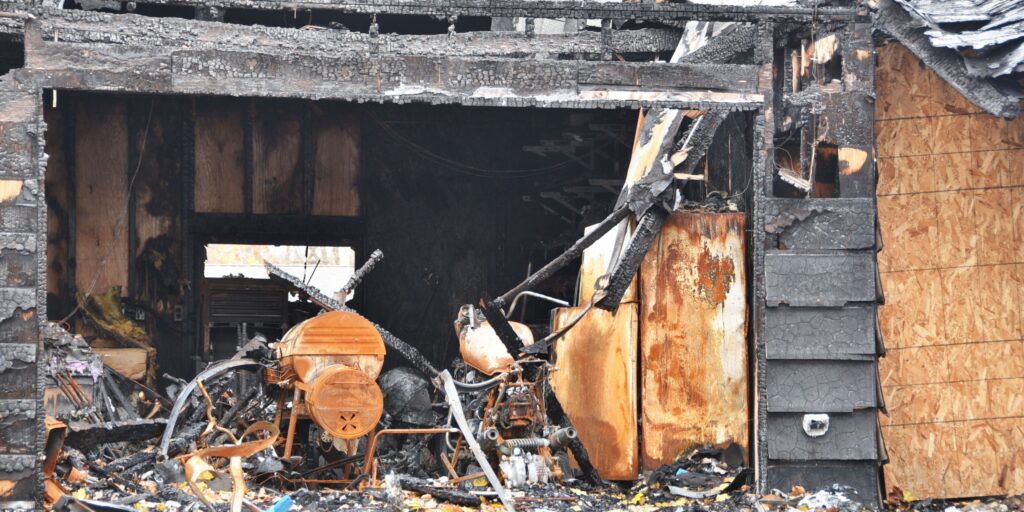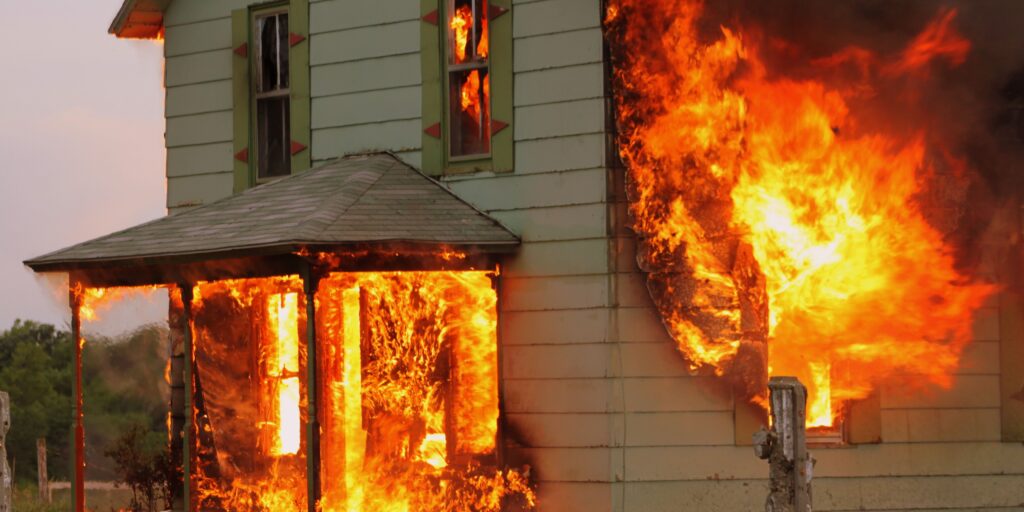
When homeowners think about fire safety, they usually focus on smoke detectors, kitchen risks, and electrical panels. But there’s one area that often gets overlooked—the garage. Your garage door is more than just an entry point for your car. It’s a major barrier between potential fire hazards and the rest of your home.
Whether your garage is attached or detached, understanding garage fire safety can help protect your family, your property, and your peace of mind.
Why the Garage Is a High-Risk Fire Zone
Garages typically store many items that increase fire risk, including:
-
Gasoline and motor oil
-
Paint, thinners, and chemicals
-
Propane tanks
-
Batteries and charging tools
-
Cardboard boxes and clutter
-
Electrical tools and extension cords
Because garages often contain flammable materials, a small spark can spread quickly—especially in an attached garage where fire can move into the home within minutes.
The Garage Door’s Role in Fire Safety
Your garage door is one of the largest openings in your home. If a fire starts in the garage, the garage door and surrounding structure can impact how fast flames and smoke spread. A strong, properly sealed, and well-maintained garage door may help reduce airflow feeding the fire and limit smoke movement into the living space.
While the garage door itself may not be “fireproof,” keeping it in good condition can provide an important layer of protection.
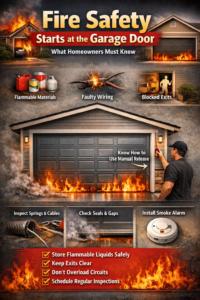
Top Fire Safety Concerns Homeowners Should Know
1. Electrical Issues and Garage Door Openers
Garage door openers are powered by electricity and often share outlets with tools and charging stations. Overloaded circuits, damaged wiring, or poorly installed outlets can become a fire hazard.
What to do:
✅ Avoid using multiple heavy tools on the same circuit
✅ Replace damaged wires immediately
✅ Use a garage door repair Elgin, IL professional if you see flickering lights, burning smell, or loose outlets
2. Stored Items Blocking Emergency Exit
In a fire emergency, the garage may become the fastest escape route—especially if the main home exit is blocked. But many garages are packed so tightly that it becomes difficult to move quickly.
What to do:
✅ Keep walkways clear
✅ Store flammable items away from heaters or electrical panels
✅ Avoid stacking boxes near the garage door tracks or motor
3. Manual Release: Know How to Use It
If the power goes out during an emergency, your garage door opener might not work. Every automatic garage door has a manual emergency release cord (usually red).
What to do:
✅ Make sure everyone in the house knows where it is
✅ Practice using it safely when the door is closed
✅ Never force a door open if springs or cables look damaged
4. Damaged Springs and Cables Can Be Dangerous
Broken springs and worn cables may not cause a fire directly—but they can prevent your garage door from opening in an emergency. Also, friction and mechanical failure can lead to overheating in some situations.
What to do:
✅ If the door jerks, slams, or struggles to lift—schedule service
✅ Never attempt spring repair yourself (it’s extremely dangerous). Hire a garage door spring repair service provider for your safety.
5. Gaps and Poor Seals Let Smoke Spread Faster
If your garage door is warped, misaligned, or has damaged weather stripping, it allows more airflow and smoke movement. Smoke is often more dangerous than the fire itself.
What to do:
✅ Replace worn weather seals
✅ Make sure the garage door closes fully and evenly
✅ Consider upgrading older doors with better insulation
Fire Prevention Tips for a Safer Garage
Here are smart habits every homeowner should follow:
✅ Keep flammable liquids stored in approved containers
✅ Don’t leave battery chargers plugged in overnight
✅ Install a smoke detector near the garage entry door
✅ Never run a car engine in a closed garage (carbon monoxide risk)
✅ Have your garage door inspected annually
A simple inspection can catch issues early—before they become expensive or dangerous.
When to Call a Professional
You should contact a garage door expert if you notice:
-
The door doesn’t fully close
-
The opener overheats or makes loud grinding sounds
-
The door is unbalanced or slams shut
-
The springs or cables look worn or broken
-
You see burnt wiring or smell something unusual
A properly working garage door isn’t just about convenience—it’s about safety.
Final Thoughts: Don’t Ignore the Garage
Fire safety isn’t only about the kitchen or living room. Your garage door is a key part of your home’s safety system, and small issues can turn into major risks if ignored.
By maintaining your garage door, keeping the area organized, and staying aware of fire hazards, you’re taking one of the smartest steps toward protecting your home and everyone inside it.